Why Mold Keeps Coming Back, and What Actually Stops It
Bleach makes mold disappear for a few weeks. Here's why it comes back, and what actually has to change for it to stay gone.
September 15, 2026 · 4 min read
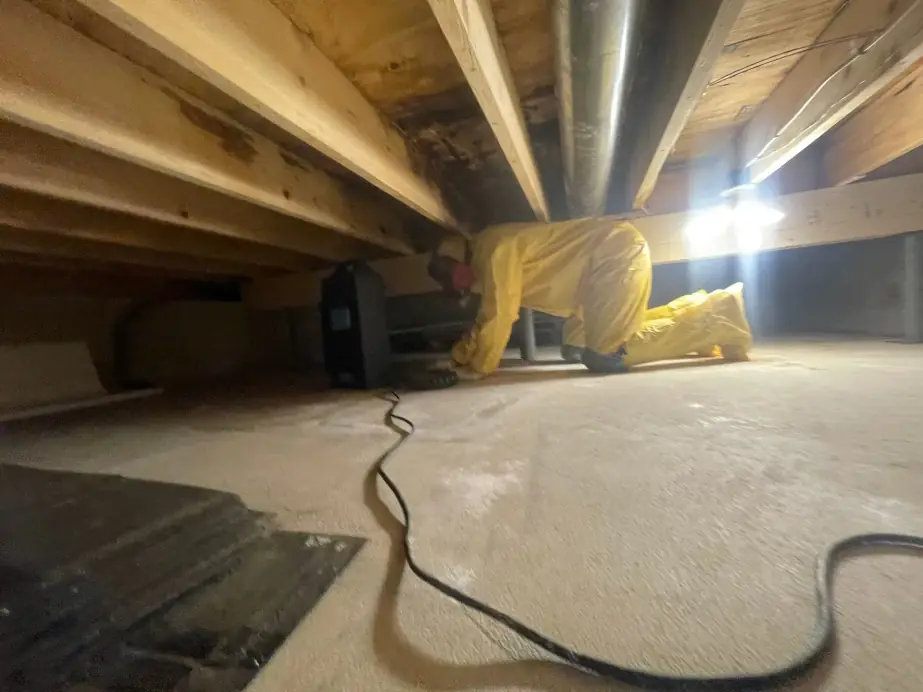
A homeowner scrubs a patch of mold off the drywall with bleach or a store bought spray, it looks gone within a day, and then a few weeks later it's back in the same spot, or a few feet away. This isn't bad luck and it isn't a stubborn strain of mold. It's what happens when the visible growth gets treated and the actual cause never does.
Mold is a moisture problem before it's anything else
Mold spores are everywhere, indoors and outdoors, all the time. They only become a growing colony when they land somewhere with enough moisture and something organic to feed on, drywall paper, wood framing, dust. Scrubbing the surface removes the colony you can see. It does nothing about the humidity, the slow leak, or the condensation that let it grow there in the first place. Within a few weeks, the same conditions produce the same result.
This is the single most common mistake in dealing with mold at home, treating it as a cleaning problem instead of a moisture problem. The cleaning is real and it matters, but it's step two, not step one.
Containment and negative air, not just wiping a wall down
A proper remediation job looks more involved than most homeowners expect, and there's a reason for it. The work area gets sealed off with plastic sheeting so disturbed spores can't travel into the rest of the house through the HVAC system or an open doorway. Inside that containment, negative air machines pull air out through HEPA filtration, which keeps the air pressure in the work zone slightly lower than the surrounding house, so air moves in, not out, while material is being removed.
That's the difference between a job that actually solves the problem and one that just moves spores from a wall onto every surface in an adjoining room. It looks like overkill until you understand what it's preventing.
A reputable remediation job also finishes with a check, not just a visual once over. That can mean an independent air quality test after the work is done, confirming spore counts in the treated area have settled back into a normal range for that house before the plastic sheeting comes down. Skipping that step means nobody actually knows the job worked, they're just hoping it did.
Three places it hides in Rhode Island houses
The same three spots turn up again and again in this part of New England, and they share a pattern: hidden, humid, and rarely checked.
- Attics: summer humidity, a roof leak nobody noticed yet, or simply not enough ridge and soffit ventilation lets warm moist air condense on the underside of the roof sheathing, where it sits against wood in the dark for months at a time.
- Crawlspaces: a dirt floor with no vapor barrier lets ground moisture rise straight into the humid air underneath the house, where it condenses on cold floor joists and subfloor framing that almost nobody ever looks at.
- Finished basements: drywall built directly against a foundation wall that takes on even a little dampness, or carpet laid over a concrete slab, hides growth behind the wall or under the pad until the smell gives it away.
Why the moisture source has to go first
Fixing this for good means finding what's actually feeding the moisture, a roof leak, a grading problem sending water toward the foundation, a bathroom fan that vents into the attic instead of outside, and correcting that before or alongside removing the existing growth. Skip that step and remediation is temporary, however thorough the cleaning was. Get it right and the growth that's removed generally stays gone, because the conditions that produced it are gone too.
What we can tell you, and what we leave to a doctor
Mold is a moisture problem and a building problem. If anyone in the house has ongoing symptoms they're worried about, that's a conversation worth having with a doctor, not something to self diagnose based on what's growing behind the baseboard. Our job is finding the moisture, containing and removing the growth properly, and making sure the conditions that caused it don't just start the same cycle again next summer.
It's also worth saying that not every damp smell in a basement means a serious problem, and not every dark spot on a bathroom ceiling needs a full containment job. A lot of small, surface level growth in a well ventilated bathroom is manageable with basic cleaning and better airflow. What separates that from a real remediation job is usually scale and location, a small patch you can see and reach is a different situation than growth spreading inside a wall cavity or across an attic deck that nobody's looked at in years.
Clean Care of New England, (401) 941-9111
Call (401) 941-9111More articles
The First Hour After a Burst Pipe or a Flooded Basement
Before a truck ever pulls up, what happens in that first hour decides how bad the damage really gets.
What Soot Actually Does to a House After the Fire Is Out
The flames are out, but the clock on your house just started. Here's what soot does in the hours and days after, and why timing changes everything.