Contamination gets removed, not cleaned
Sewage and Biohazard Clean-Up in Warwick, RI
A sewage backup and a biohazard call are handled under the same rule: anything porous that contamination has soaked into comes out of the building, and everything else gets disinfected under protocol. Clean Care runs both around the clock out of Warwick, with the same one hour target on either kind of call.
Chapter 01
What a sewage backup actually contaminates
Category three water, the classification the industry uses for sewage, carries bacteria and pathogens that a wet vac and a fan cannot address. Drywall, carpet, carpet pad, insulation and any other porous material the water has soaked into cannot be dried out and called clean, because the contamination is inside the material, not on its surface. Our technicians make that call on sight, and it is the single most common misunderstanding homeowners have walking into a flooded basement after a backup.
That standard is why a sewage job almost always means demolition before it means drying. Baseboard, drywall a foot or more above the water line, and any flooring that took contaminated water gets cut out and bagged for disposal, not scrubbed and left in place. What is left, the framing and any hard, non-porous surfaces, is what actually gets cleaned and disinfected.
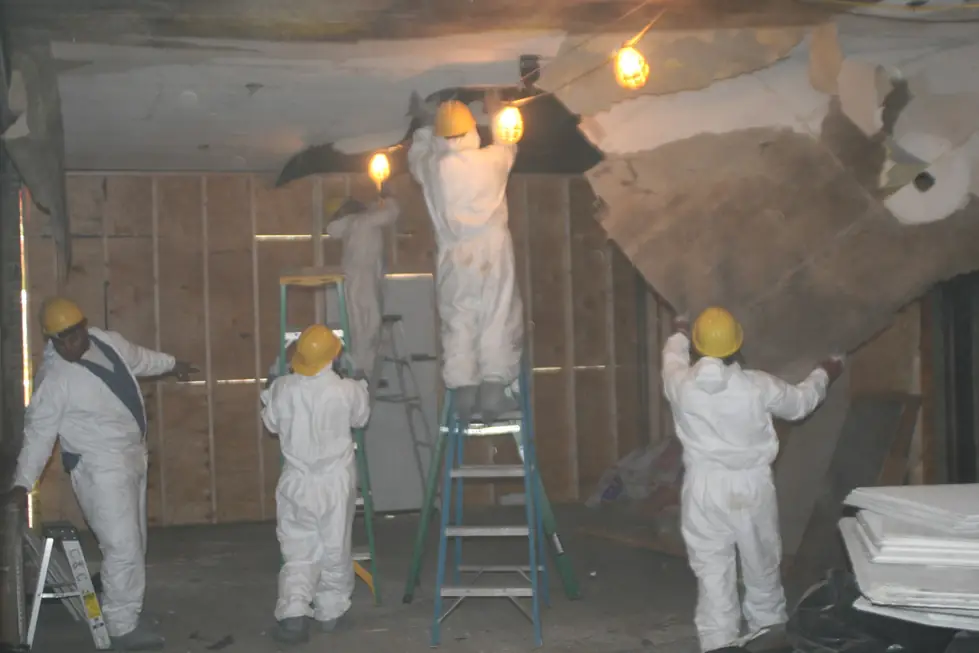
Five Clean Care technicians in PPE and hardhats gutting a damaged interior
Extraction, removal and the disinfection protocol
The first hours of a sewage call are extraction and containment, keeping the contaminated water from spreading further into the structure while our crew works out how far it has traveled behind walls and under flooring. Once the affected porous material is identified and removed, IICRC certified technicians run a disinfection protocol on every remaining surface, then bring in industrial dehumidification to dry the structure itself, not just the visible floor.
Ann Fuller's basement in Warwick is a job that went through this whole sequence. Her home took a sewer flood, and Nick Pullano and his crew spent hours extracting water late into the night before the real work started. Over the following months Clean Care redid all four affected basement rooms, and the furniture that could be saved was cleaned, put into storage and returned once the space was ready.
Odor is the last thing to clear, and it clears because the source left the building, not because a masking agent was sprayed over it. A room that still smells after cleaning almost always means something contaminated is still behind a wall or under a floor.
Chapter 03
Biohazard and trauma scenes
A trauma or crime scene call carries the same contaminated material rule as a sewage job, applied to blood or other biological material instead of sewage. Affected material is removed and disposed of under the same containment and protocol, and the space is disinfected and cleared before anyone else goes back into the room. Our crews are equipped and IICRC trained for this work and treat every one of these calls the same way, with a family or a business owner nearby who is having the worst day of the year.
We do not need the details of what happened to do the work correctly, and we do not ask for more than we need. Clean Care handles biohazard and trauma clean-up with the same discretion it would want for its own family, arrives within the same one hour target as any other emergency call, and coordinates directly with property managers, families or the insurance adjuster on file so nobody involved has to manage the logistics alone.
Clean Care — IICRC certified technicians. Licensed asbestos abatement contractor. Call (401) 941-9111.
Containment first
Demolition under containment, not a hallway pile
Contaminated drywall, flooring and cabinetry come out under the same containment discipline as a mold job, sealed and removed through a controlled path rather than carried loose through the rest of the house. The kitchen below was mid demolition under exactly this kind of containment sheeting.
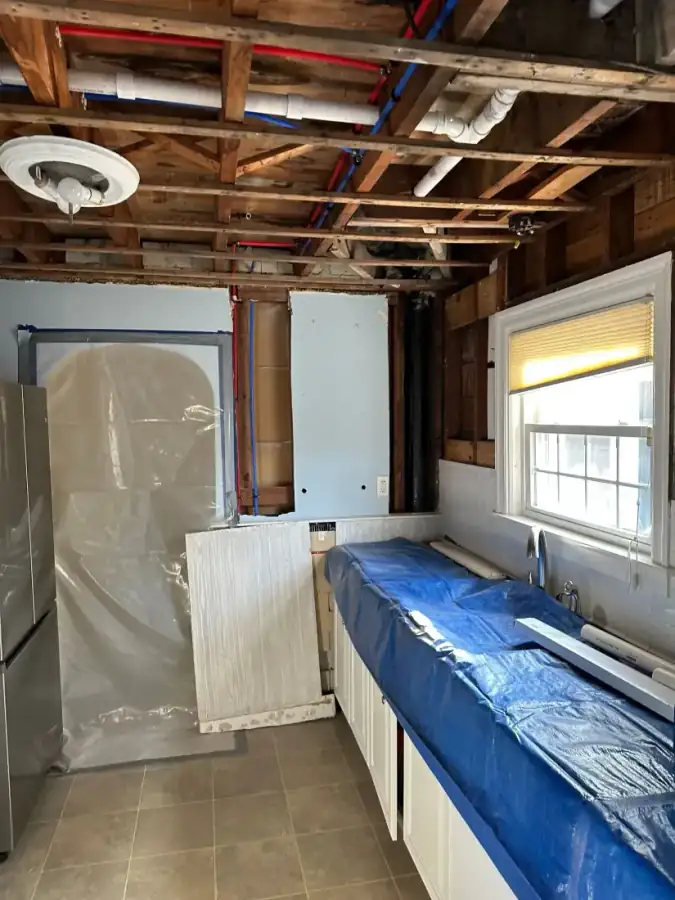
Contaminated material comes out. That is the whole rule.
Clean Care of New England has been locally and family owned in Warwick since 1989, and answers sewage and biohazard calls around the clock across Rhode Island, Southeastern Massachusetts and Northern Connecticut.