The First Hour After a Burst Pipe or a Flooded Basement
Before a truck ever pulls up, what happens in that first hour decides how bad the damage really gets.
September 15, 2026 · 3 min read
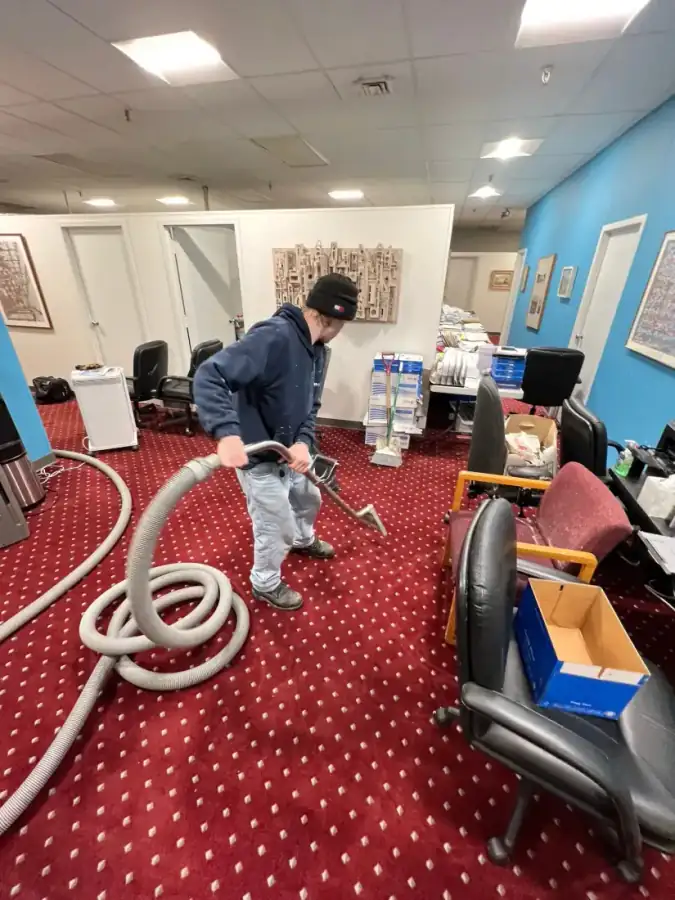
A pipe lets go behind a wall, or a sump pump gives out halfway through a storm, and water starts moving through the house faster than most people expect. The next sixty minutes matter more than almost anything that happens after a crew arrives. Water finds the path of least resistance immediately, down through the subfloor, behind the baseboards, into wall cavities where you can't see it happening. What you do, and don't do, in that first hour has more effect on the final repair bill than people realize.
The four things that matter most
In the first hour, before anyone else gets involved, four things are worth doing, and worth doing in this order.
- Cut power to the flooded area if you can do it safely from dry ground, never by stepping into standing water to reach a switch.
- Find your main water shut-off valve and close it if the water is coming from inside your own plumbing, a burst supply line, a failed water heater, a washing machine hose.
- Leave furniture and belongings where they are for the first few minutes rather than dragging them across soaked flooring.
- Photograph every room and every damaged item before you touch or move anything.
Cut the power to the affected area first
Water and live electrical circuits are a genuinely dangerous combination, and it's the first thing an experienced crew checks walking into any loss. If the breaker panel itself sits in the flooded area, or you're not confident which breaker controls which room, don't guess. Stay out of the water and wait for someone who can shut it off safely.
This isn't a step to rush past. People get hurt every year wading into a flooded basement with the power still live because the water looked shallow enough to risk it.
Find the water shut-off and use it
If the source is inside the house, most Rhode Island homes have a main shut-off valve near the water meter, in the basement, or where the main line comes through the foundation wall. Turn it clockwise until it stops. It's worth finding that valve before you ever need it, not at midnight during an actual emergency.
If the water is coming in from outside, storm runoff, a sewer backup, a failed foundation seal, there's no valve to close. That's a different kind of problem, and it's the moment to call for help rather than try to solve it alone.
Don't move what you can still use
The instinct is to grab everything and get it out of the water immediately. Resist that for the first few minutes. A chair leg sitting in an inch of water for twenty minutes is usually fine once it's dried properly. Furniture dragged across a soaked carpet spreads contamination and can scratch or gouge flooring that would otherwise have been salvageable. Move what's genuinely at risk, electronics, important documents, anything already sitting on the floor, and leave the rest for a crew that has the equipment to lift and dry furniture without wrecking what's underneath it.
Photograph everything before you touch it
Your phone camera is the most useful tool in the house right now. Before mopping anything up, walk the affected rooms and take photos and a slow video, wide shots of each space, close-ups of the water line on the walls, close-ups of anything visibly damaged. This is exactly what an insurance adjuster will ask for later, and it's far easier to capture in the first ten minutes than to reconstruct from memory once the room has been rearranged and dried out.
Then call for help
Once the power and water are handled and you've got photos, the timing of the next call matters. A crew that arrives within an hour and starts extraction right away is working against a real clock, water sitting on hardwood or under carpet pad for six hours does meaningfully more damage than water sitting for one. Clean Care runs a 24 hour line for exactly this reason, (401) 941-9111, with a target of getting someone on site within about an hour of the call, any hour, any day of the year.
None of this replaces a professional assessment. But a homeowner who cuts the power, finds the shut-off, leaves the furniture alone, and gets photos before help arrives has already done the four things that matter most. Everything after that is the part the crew is trained and equipped for.
Clean Care of New England, (401) 941-9111
Call (401) 941-9111More articles
Why Mold Keeps Coming Back, and What Actually Stops It
Bleach makes mold disappear for a few weeks. Here's why it comes back, and what actually has to change for it to stay gone.
What Soot Actually Does to a House After the Fire Is Out
The flames are out, but the clock on your house just started. Here's what soot does in the hours and days after, and why timing changes everything.