The first hours decide the rest of the job
Storm and Flood Clean-Up in Warwick, RI
A storm leaves an open building and rising water at the same time, so the first hours are about boarding up and tarping before anything else, not just pumping water out. Clean Care handles the whole sequence, from the truck rolling out to the debris and the downed tree in the yard.
Chapter 01
Board-up and tarping happen in the first hours
A blown-out window or a roof torn open by wind does two things at once: it lets the weather keep getting in, and it leaves the building open to anyone passing by. Before a drying plan even gets written, our crews board up broken windows and doors and tarp a damaged roof, because every hour the building stays open is another hour of rain, wind or theft undoing whatever gets cleaned up next.
This is the first call a lot of storm-hit homeowners and property managers in Warwick make, sometimes before the rain has even stopped. Clean Care dispatches around the clock and aims to have a crew on site within one hour, with board-up and tarping materials on the truck rather than something that has to be sourced after arrival.
Securing the building first also protects the insurance claim. An adjuster expects to see that reasonable steps were taken to prevent further damage once the storm passed, and a boarded window or a tarped roof is exactly that evidence.
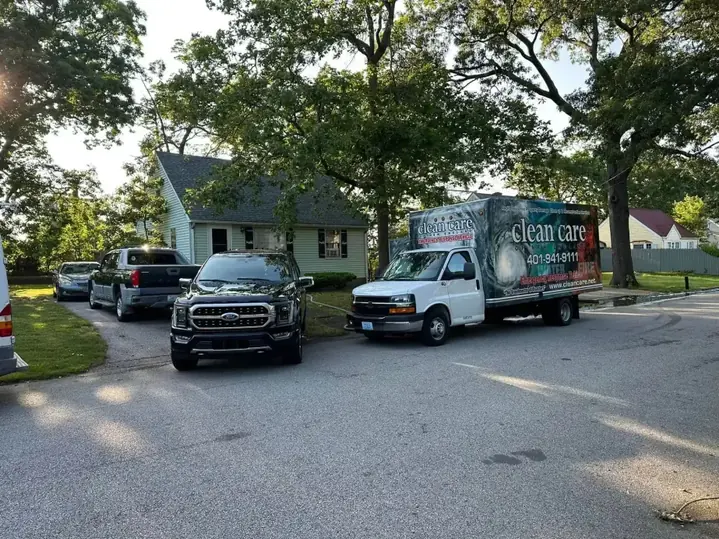
Branded Clean Care emergency response truck parked on a residential street
Flooding follows its own rules once the water is dirty
Not all flood water is treated the same way, and the industry draws a hard line at category three, water that carries sewage, groundwater or runoff contamination rather than a clean supply-line break. Once water crosses into that category, porous material it has touched, carpet padding, drywall, insulation, gets removed rather than dried and kept, because drying does not remove what contaminated the water in the first place.
For water that is still clean or lightly contaminated, we extract first with truck-mounted and portable equipment, then run structural drying with air movers and dehumidification rather than leaving fans blowing across a wet floor and calling it done. Moisture readings get taken and logged until the building actually reads dry, not until it looks dry.
IICRC certified technicians make the category call on arrival, because getting it wrong in either direction either strips material that could have been saved or leaves contaminated material behind a freshly painted wall.
Chapter 03
Debris and the tree that came down with the storm
Storm damage rarely stops at water and a torn roof. Downed limbs, a tree through a fence line or a roof, and general storm debris are usually part of the same job, and Clean Care clears it as part of the response rather than leaving the homeowner to find a separate contractor mid-crisis.
Once the building is secured, the water is out and the debris is cleared, the rebuild runs through our own in-house Decorating Center, with CAD-designed layouts and installation of Shaw flooring, Dal-Tile, Fieldcrest and Merillat cabinetry and Hunter Douglas window treatments. Clean Care has run the emergency response and the rebuild out of Warwick, Rhode Island, since 1989, so it stays one contractor from the tarp on the roof to the finished room.
Clean Care — IICRC certified technicians. Licensed asbestos abatement contractor. Call (401) 941-9111.
Secured before it is dried
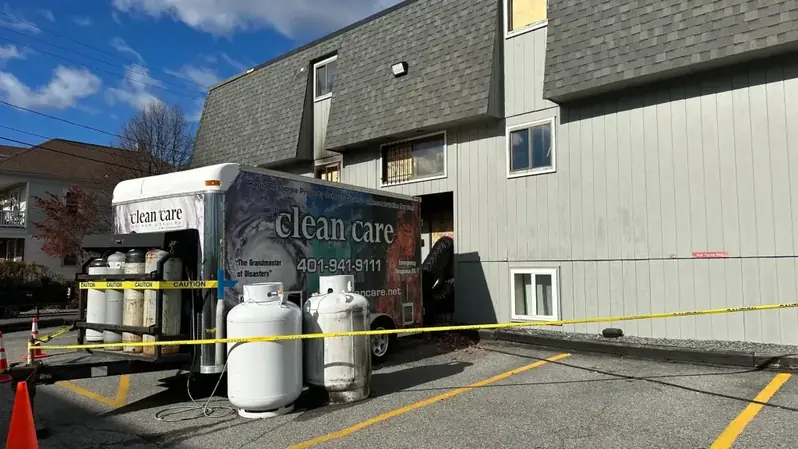
Boarded and tarped, equipment staged on site
A boarded window and a temporary trailer of drying equipment on the property is what a Clean Care storm response looks like in the first day, well before the rebuild starts. Getting the building weathertight comes first every time.
Board it up, dry it out, clear what came down.
Clean Care of New England answers around the clock and aims to have a crew at your door in Warwick or anywhere across Rhode Island, Southeastern Massachusetts or Northern Connecticut within one hour.