Extraction, then drying
Water Damage Restoration in Warwick, RI
Water gets into the wall cavity, the subfloor and the insulation long before it shows on the surface. Clean Care extracts first, then dries the structure itself, not just the puddle on the floor.
Chapter 01
Where the water actually goes
A burst pipe, a failed appliance hose or a roof leak rarely stays where it lands. Water runs along a subfloor until it finds a seam, climbs a wall cavity through capillary action, and soaks into batt insulation that has no way to dry on its own. By the time a homeowner sees a stain on the ceiling or a soft spot underfoot, the water has usually been moving through the structure for hours.
Sewage backups and storm water add a second problem on top of the first, contamination that has to be handled before drying even starts. Every loss we take gets read for its source and its category before a single air mover goes down, because a burst supply line and a sewage backup are not the same job.
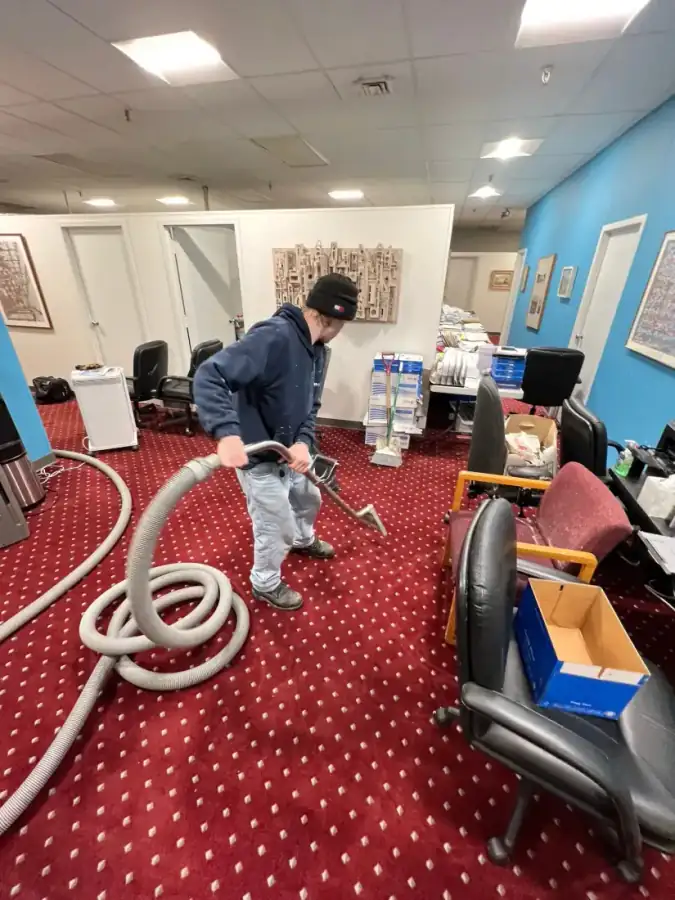
Technician pulling a carpet extraction hose across a commercial office floor during water extraction
Extraction first, then structural drying
Standing water comes out first, pumped and extracted rather than left to run onto towels or soak further into the subfloor. That part looks the same everywhere. What happens next is the part that actually decides whether a house dries out clean or grows a mold problem six weeks later.
Our IICRC certified technicians set air movers and industrial dehumidifiers to dry the structure itself, the wall cavity, the subfloor and the insulation, not to blow air across a wet carpet and call it finished. Fans pointed at a puddle move air. They do not pull moisture out of drywall or a joist, and a floor that looks dry on day two can still be wet inside the wall on day ten.
Clean Care dispatches out of Warwick around the clock and aims to have a crew on site within one hour of the call, because the sooner the water is out and the drying starts, the less of the structure ends up soaked through.
Chapter 03
Moisture mapping until the structure reads dry
We take daily moisture readings with the same meters throughout the job, mapping the wall cavities, subfloor and framing against a dry reading taken elsewhere in the building, and keep the equipment running until every number matches. A house is not dry because it looks dry. It is dry when the readings say so.
Skip that step and the job looks finished while the framing behind a fresh coat of paint is still holding moisture, which is exactly how mold gets a second start in the same wall a year later. Clean Care has run the water side and the rebuild side of the same company out of Warwick, Rhode Island, since 1989, so when a wall does need to come out and go back, our own in-house Decorating Center handles the flooring, cabinetry and finish work without bringing in a second contractor.
Clean Care — IICRC certified technicians. Licensed asbestos abatement contractor. Call (401) 941-9111.
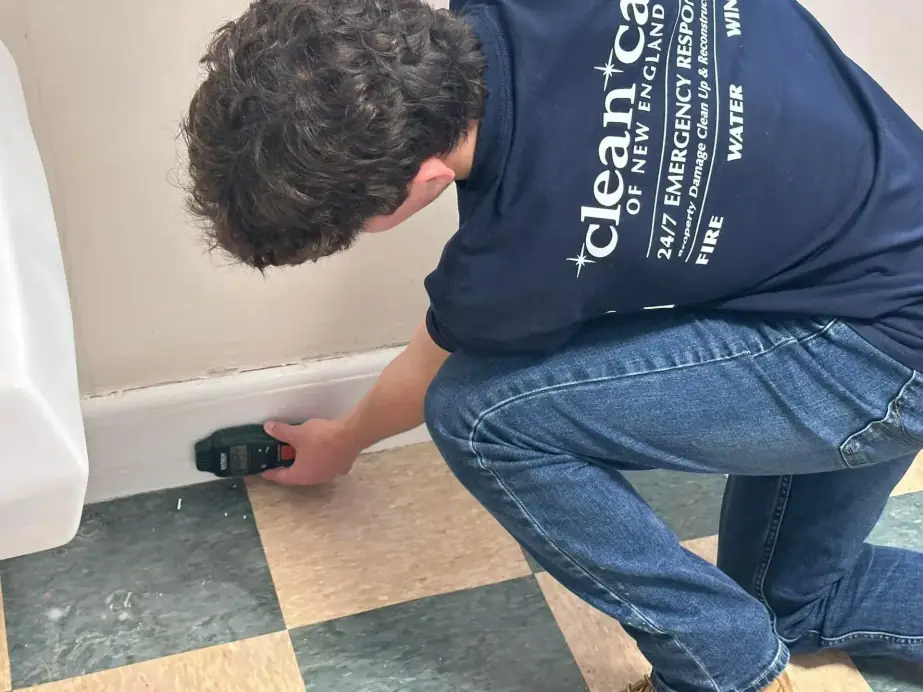
How we know when it is actually dry
A reading, not a guess
The same meter gets used against the same spots every visit, and the drying equipment stays running until those readings match a dry area elsewhere in the building. That is how a job gets called finished, not by how a room looks or how it smells the morning the fans come out.
Water moving right now? The longer it sits, the further it spreads.
Clean Care of New England answers around the clock and aims to have a crew at your door in Warwick or anywhere across Rhode Island, Southeastern Massachusetts or Northern Connecticut within one hour.