What Soot Actually Does to a House After the Fire Is Out
The flames are out, but the clock on your house just started. Here's what soot does in the hours and days after, and why timing changes everything.
September 15, 2026 · 3 min read
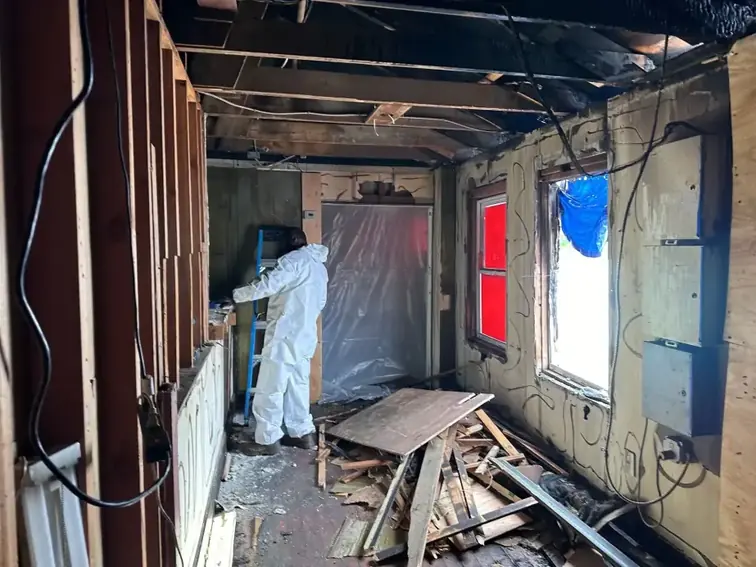
The fire department leaves, the smoke has cleared, and the house is still standing. It's tempting to think the damage is done and now it's just a matter of cleaning up. It isn't. Soot is chemically active, and what it does to a house in the hours and days after the flames go out is often worse than what the fire itself did.
The clock starts the moment the flames go out
Soot residue is acidic, and that acidity keeps working on whatever it's sitting on for as long as it's left there. Metal fixtures, appliance finishes, grout, unfinished wood, all of it is vulnerable to etching and staining that gets measurably worse by the day. A metal surface that could have been cleaned and saved on day one can be permanently pitted by day four. This is the real reason fast response matters after a fire, not urgency for its own sake, but a genuine chemical clock running against specific materials in the house.
Why soot travels farther than the fire did
Fire tends to stay contained to a room or two. Soot doesn't. Heat from the fire pushes fine particulate through the HVAC system, through gaps around doors and outlets, into rooms that never saw a flame. A homeowner will often walk into a bedroom two floors away from the fire and find a gray film on every surface. That's soot that traveled through the ductwork while the fire was still burning, and it needs the same acidic cleanup as the room where the fire started, even though nothing there actually burned.
What can be cleaned, and what has to come out
Hard, sealed, non porous surfaces, tile, sealed wood, most metal and glass, can usually be cleaned if the response is fast enough and the technique matches the surface and the type of soot. Protein based residue from a kitchen fire behaves differently than the dry, powdery soot from burning synthetics, and cleaning the wrong way can grind residue deeper into a surface instead of lifting it out.
Porous materials are a different story. Drywall, insulation, carpet, upholstered furniture, anything with an open structure tends to absorb soot and odor into itself rather than holding it on the surface. Past a certain point, those materials get removed and replaced rather than cleaned, because no amount of cleaning gets what's soaked into the fibers back out.
Personal belongings get handled separately from the structure itself, and that split matters. Delicate fabrics and textiles need their own process, and electronics that have been exposed to smoke need cleaning and deodorizing before anyone risks powering them back on. Ultrasonic cleaning systems can reach into the seams and joints of an item that a hand wipe never would, which is the difference between a keepsake that comes back usable and one that gets written off along with the drywall.
Deodorizing a house, not perfuming it
A can of air freshener masks a smoke smell for a few hours and does nothing to the source. Actual deodorization means finding where odor causing particles have settled, inside wall cavities, in HVAC ductwork, in porous materials, and treating or removing them at the source. Thermal fogging and ozone or hydroxyl treatments have a real place in this work, but they come after the affected materials have been cleaned or removed, not instead of it. A house that smells fine the day the crew leaves and smells like smoke again a week later usually had the smell covered up instead of removed.
The water the fire department left behind
Every fire that needed a hose gets a second problem nobody thinks about until later, the water used to put it out. That water goes everywhere the fire went, down through floors, into wall cavities, pooling in the basement below. Left alone, it starts its own separate clock toward mold growth within a couple of days. A fire and soot job that ignores the firefighting water isn't finished, it addressed the visible damage and left a second, slower problem to show up in a few weeks.
Between the acidity, the reach of the soot through the ductwork, and the water underneath it all, a fire loss is rarely as simple as it looks the morning after. The materials that can be saved usually can only be saved if the work starts fast, and that's the whole reason for showing up within the hour rather than the next available slot.
Clean Care of New England, (401) 941-9111
Call (401) 941-9111More articles
The First Hour After a Burst Pipe or a Flooded Basement
Before a truck ever pulls up, what happens in that first hour decides how bad the damage really gets.
Why Mold Keeps Coming Back, and What Actually Stops It
Bleach makes mold disappear for a few weeks. Here's why it comes back, and what actually has to change for it to stay gone.